
Sodatide Research: What the Studies Say About the Dose
Research claims are easy to wave around and hard to check. Here is what we read, what it found, and what it cannot tell you about one small capsule.
Written by the Sodatidedaily Editorial Desk · Medically reviewed by Dr. Pascale Carbonara, MD, Physician on · Last updated
No study tested Sodatide as sold. Studies on its ingredients used far larger doses: 45,000 mg a day of resistant starch against 100 mg here, and 8,000 mg a day of inulin against 211 mg. The probiotic blend lists no CFU or strains, so no trial result can be attached to it.
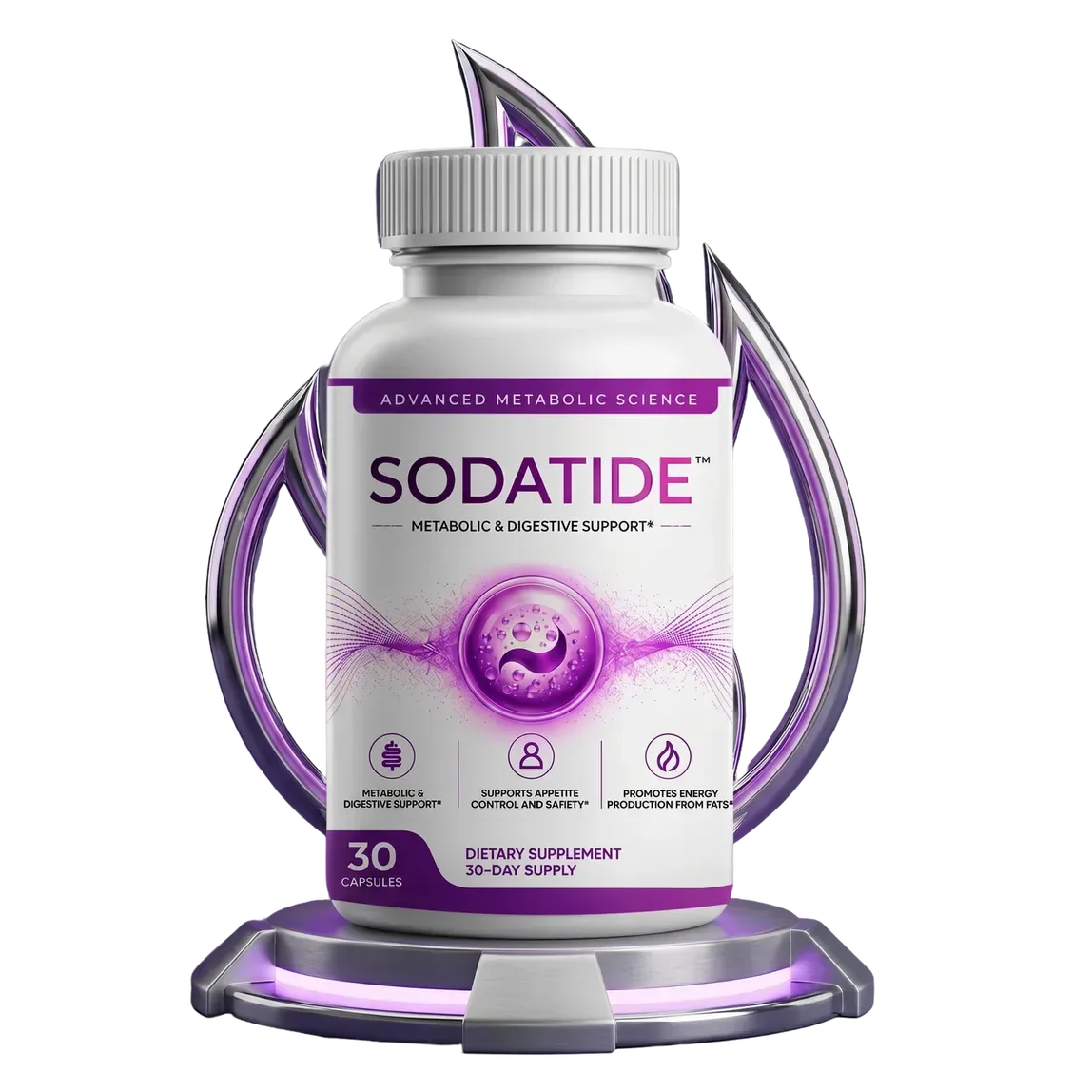
If the science summary has not put you off, the checkout shows the price and the 60-day guarantee.
See today's price and guaranteeDisclosure: Sodatidedaily earns a commission on orders placed through this site. Sodatide is a supplement, not a medicine, and it is not FDA approved.Key facts
- No trial of Sodatide as sold is known to us.
- Resistant starch trial: 68 adults, 12 weeks, 45 g a day, no increase in satiety or reduction in appetite and food intake.
- Systematic review of inulin-type fructans: five trials reporting no effect on appetite sensations.
- Inulin: 211 mg here against 8,000 mg a day in one trial, about 38 times smaller.
- Probiotic evidence is strain-specific. No strain is named here, and no potency is published.
- Four journal and press logos appear on the listing with no paper attached.
Is there any research on Sodatide itself?
No. We know of no published study of Sodatide as sold, whether human or lab. We also hold no safety trial, no bioavailability study and no counts from an independent lab. That is not a trick. It is a plain gap, and every claim on this page keeps that in view.
What exists is research on single ingredients, and on probiotics in general. That research can help you ask good questions. It cannot prove what one small capsule will do.
What did the resistant starch trial find?
A 12-week randomized trial gave 68 adults 45 grams a day of resistant starch. The authors concluded that it did not increase satiety or reduce appetite and food intake. This is the trial that bears most directly on the appetite and satiety line of the Sodatide label.
Sodatide carries 100 mg of resistant starch. Divide 45,000 by 100 and you get 450. The trial used 450 times the printed amount, and it still found nothing on appetite. That does not prove 100 mg is harmful, and it does not prove it is useless for other things. It does mean this study offers no support for the appetite claim.
What about inulin?
A systematic review of inulin-type fructans looked at appetite as well. It found five trials that reported no effect on appetite sensations. One trial in our sources used 8,000 mg a day of inulin, about 38 times the 211 mg in a Sodatide capsule.
| Ingredient | Per capsule | Studied dose in our sources | How big the gap is |
|---|---|---|---|
| Chicory root inulin | 211 mg | 8,000 mg a day in one trial | About 38 times |
| Potato resistant starch | 100 mg | 45,000 mg a day in the satiety trial | 450 times |
| Probiotic blend | 36 mg together | Trials count cells, not milligrams | Cannot be compared |
Note that these sums are ours. They show the size of a gap, in units anyone can picture. They are not a suggestion to take more capsules. The label says one a day, and do not exceed the dose.
Why can the probiotic blend not be matched to a study?
Two things are needed to match a probiotic to a trial: the strain and the dose in colony-forming units. Sodatide prints neither. It prints three names at genus and species level and a combined weight in milligrams.
NCCIH says different types of probiotics may have different effects, and that a result for one kind does not mean another would do the same. ISAPP says responsible makers list genus, species and strain, and the potency to expect through the end of shelf life. The label does not meet that standard. So any study quoted beside this blend is a study of something else.
One of the three organisms, Akkermansia muciniphila, has a published trial that tested live and pasteurized forms separately. The Sodatide label does not say which form is in the capsule, so even that trial cannot be linked here.
What about the logos on the listing?
The listing carries a bar of four logos: the International Journal of Obesity, Nature, The Boston Globe and the American Physiological Society. No paper, author, date, title or finding sits beside any of them. A journal logo is not a citation, and a newspaper logo is not a finding. We publish the bar and say what it does and does not show: it shows four names, and nothing else.
How should you read supplement research?
- Ask if the study was on this exact product, or on one ingredient.
- Compare the dose in the study with the dose on the label.
- For probiotics, check the strain and the CFU count.
- Look at who ran the study, how long it lasted and how many people took part.
- Be wary of any page that cites a journal name with no title, date or authors.
These five questions work for any supplement, not only this one.
Frequently asked questions
Is there research on Sodatide?
No study of Sodatide as sold is known to us. The research we cite covers single ingredients at much larger doses.
What did the resistant starch trial find?
A 12-week trial gave 68 adults 45 g a day and concluded that it did not increase satiety or reduce appetite and food intake. A Sodatide capsule holds 100 mg.
What did the inulin review find?
A systematic review of inulin-type fructans found five trials reporting no effect on appetite sensations. One trial used 8,000 mg a day, against 211 mg here.
Why are probiotic studies not linked to Sodatide?
Probiotic evidence is tied to specific strains and doses in CFU. The label prints no strains and no CFU count, so no trial result can be attached.
What do the journal logos on the listing mean?
They are four logos with no paper, author, date or finding attached. A logo is not a citation.
Does low-dose mean useless?
Not necessarily, but it means the trial results cannot be used as support. Talk to a doctor if you want a dose that fits a health goal.
Our view
The research picture is honest but thin. For the claim most people care about, appetite and fullness, the main ingredients were tested at hundreds of times the dose in this capsule and showed no effect on appetite. For the probiotic part, there is nothing to attach.
We think a reader should know that before buying. A modest capsule with careful wording can still be a fair choice for some people, as long as nobody pretends a study backs it. If you want evidence-based help, speak to a doctor.
If you are comfortable with the evidence as it stands, the checkout shows the price and the 60-day guarantee.
See today's price and guaranteeDisclosure: Sodatidedaily earns a commission on orders placed through this site. Sodatide is a supplement, not a medicine, and it is not FDA approved.